
The Spiritual Community Gets This Wrong: Hypervigilance ≠ Intuition

In spiritual development spaces, heightened awareness is often celebrated as intuition.

But there is a distinction that many sensitive, empathic, and intuitive individuals need to understand:
Hypervigilance is not intuition.
They can feel similar.
Both involve strong perception.
Both involve noticing subtle cues.
Both can make someone highly attuned to others.
But neurologically, psychologically, and energetically, they arise from entirely different systems.
Understanding this difference does more than clarify your spiritual development — it protects your nervous system health and strengthens genuine intuitive accuracy.
What Is Hypervigilance?
Hypervigilance is a trauma-adaptive nervous system state.
It develops when someone has experienced prolonged stress, instability, or emotional unpredictability. The brain becomes trained to anticipate threat in order to stay safe.
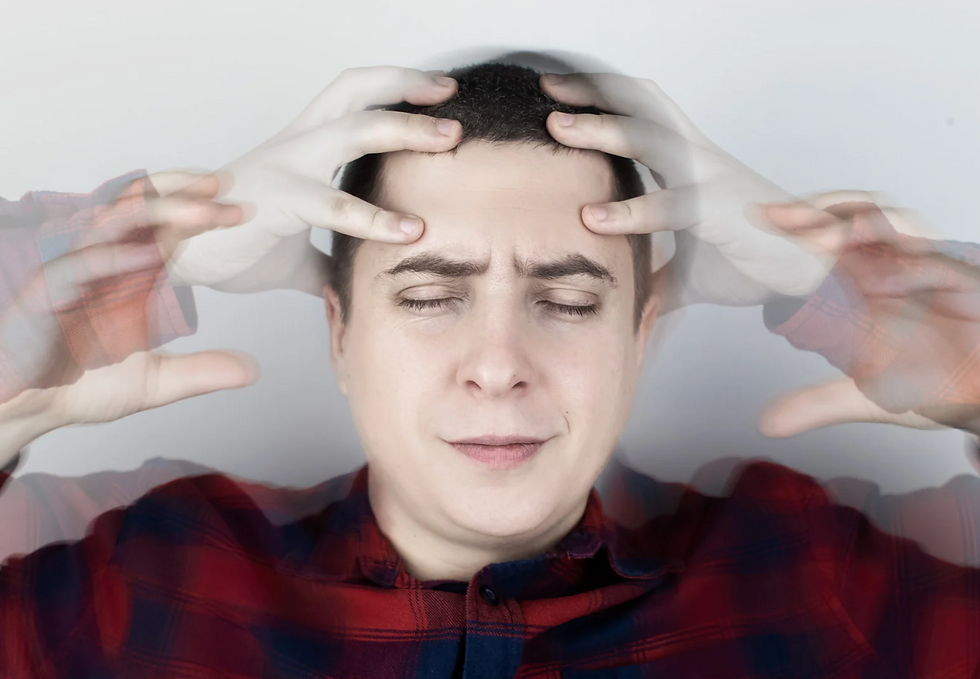
Common contributing experiences include:
Emotional unpredictability in childhood
Chronic stress or high-pressure environments
Rejection or abandonment
Sudden loss or grief
Ongoing anxiety
Living in environments requiring constant “reading the room”
From a neuroscience perspective, hypervigilance involves:
Increased amygdala activation (the brain’s threat detection centre)
Heightened sympathetic nervous system response (fight-or-flight)
Elevated cortisol and stress hormones
Reduced prefrontal cortex regulation during perceived threat
The brain begins scanning constantly.
It asks:
What might go wrong?
How do I prevent pain?
How do I stay safe?
Signs of Hypervigilance
Overanalyzing facial expressions
Monitoring tone shifts
Feeling responsible for regulating others’ emotions
Anticipating worst-case scenarios
Difficulty relaxing or fully resting

Shallow breathing or muscle tension
Persistent “what if” mental loops
This is not psychic ability.
It is a survival system doing its job.
And while it is protective, it is also exhausting.
What Is Intuition?
Intuition operates differently.
Rather than being threat-driven, intuition is pattern recognition integrated with internal bodily awareness.
Research in neuroscience suggests intuitive processing involves:
Subconscious memory integration
Interoception (awareness of internal body signals)
Emotional intelligence

Prefrontal cortex integration
Rapid non-linear processing of stored experience
Intuition is not reactive.
It is integrative.
It does not arise from fear — it arises from internal coherence.
What Intuition Feels Like
Intuition feels calm. Not numb or disconnected, but steady in the body. Your breath remains even. Your muscles are not bracing. There is no surge of adrenaline attached to it. Even when the insight is significant, your nervous system does not spike. The body stays regulated.
It feels clear. There is no frantic search for reassurance and no mental gymnastics trying to convince yourself. The message is simple and coherent. You are not arguing internally. You are not trying to decode something chaotic. There is a sense of internal alignment.
It feels direct. Intuition does not arrive as a dramatic storyline. Often it is just a sentence. Sometimes it is only a sensation. It does not need embellishment. It does not try to scare you into action. It presents information cleanly.
It feels neutral. Even if the insight is uncomfortable, the emotional charge is low. There may be awareness, but there is no panic attached to it. Intuition does not amplify fear in order to gain your attention. It does not demand urgency.
It does not spiral. It does not build elaborate future scenarios. It does not replay images repeatedly. It does not generate catastrophic chains of “what if.” It arrives, delivers its message, and remains steady.
True intuitive insight often appears as a quiet knowing — a matter-of-fact awareness such as, “This isn’t right,” or “This is the direction.” It may show up as a subtle body sensation — a gentle expansion in the chest, a settling in the stomach, or a light contraction that feels informative rather than alarming.

Sometimes it feels like a brief internal click, a moment where pieces connect effortlessly without force. Other times it shows up as a steady nudge toward or away from something. Not a shove. Not a push. Just a consistent orientation.
And then it passes.
It does not demand obsession. It does not loop endlessly in your thoughts. It does not require constant checking or reassurance. Intuition offers information. Hypervigilance demands control.
Intuition trusts that once you’ve received the message, you can respond in your own time. It does not chase you.
Why Sensitive People Confuse the Two
Many highly intuitive individuals grew up needing to read emotional shifts for safety.
They learned to:
Predict mood changes
Anticipate conflict
Monitor tone and body language
Stay ahead of emotional volatility
These skills create heightened perceptual ability.
Over time, this can feel psychic.
But hypervigilance is rooted in fear of harm.
Intuition is rooted in internal safety.
The nervous system state determines the accuracy of perception.
When the body is in fight-or-flight, perception becomes threat-filtered.
When the body is regulated (ventral vagal state), perception becomes clearer and more grounded.
A Deeper Comparison: Intuition vs Hypervigilance
1. Body Sensation
The body is often the clearest indicator of whether you are in intuition or survival.
When hypervigilance is active, the body reflects activation. The chest may feel tight. Breathing becomes shallow. The jaw or shoulders hold tension. The heart rate may elevate slightly without obvious cause. There is a subtle restlessness — an edge of adrenaline that keeps you alert.
The body feels prepared.
In contrast, intuition arises from a regulated nervous system. The body remains relaxed or neutral. The breath stays slow and steady. Any sensation that appears feels informative rather than contracting. There is no rush of urgency attached to it.
If your body is bracing, you are likely in survival mode.
Intuition does not require bracing.

2. Thought Pattern
The mind reveals the second distinction.
Hypervigilance tends to replay scenarios. It predicts negative outcomes and scans for potential problems. There is often a sense of responsibility — a belief that you must anticipate and fix what might go wrong. The mind rehearses conversations, outcomes, and defensive strategies. It loops.
Intuition does not loop.
It appears once, often simply. It does not require rehearsal. It does not construct elaborate mental simulations. It does not demand immediate action. The message feels complete in itself.
Intuition does not argue with itself.
3. Emotional Tone
The emotional tone is markedly different between the two states.
Hypervigilance feels urgent. Pressured. Fear-based. There may be heaviness or defensiveness attached to it. Even if the content feels insightful, the emotional charge is high.
Intuition feels steady. Grounded. Clear. Clean. Quietly certain. Even when it delivers uncomfortable truth, it does not feel panicked. There is clarity without chaos.
That difference in tone — not the intensity of perception — is what separates wisdom from survival.
Can Trauma Block Intuition?
Not directly.
However, chronic nervous system dysregulation can distort perception.
When the sympathetic nervous system remains dominant for extended periods, the brain prioritises survival over clarity. The amygdala becomes more reactive, threat detection increases, and neutral cues can begin to feel dangerous. Ambiguity may be interpreted as risk. Uncertainty may feel intolerable.

In this state, the brain is not trying to access insight — it is trying to prevent harm.
This is where anxiety can start to feel intuitive.
The solution is not to push harder into psychic development or attempt to “activate” your gift more intensely. The solution is regulation.
Intuition strengthens when the body feels safe. Without safety, perception is filtered through fear.
Strengthening True Intuition
If you want to deepen authentic intuitive clarity, begin with the nervous system.
Prioritise regulation. Practices such as breathwork, grounding exercises, and somatic awareness restore internal stability. When the body settles, perception sharpens naturally.
Reduce urgency. True intuition does not demand immediate reaction. If something feels time-pressured or catastrophic, pause. Clarity does not expire in seconds.
Track your body state. Tension, contraction, and bracing typically signal survival mode. Neutrality, steadiness, and relaxed awareness signal clarity.
Observe repetition. When thoughts replay repeatedly or escalate in intensity, anxiety is often present. Intuition rarely loops. It informs and then settles.
Build internal safety. Intuition thrives in calm environments. Chaos may heighten perception, but it distorts interpretation.
Grounded psychics are regulated psychics.
Without regulation, fear can convincingly mimic guidance.
The Truth Many People Miss
Many individuals who believe they are “blocked” are not blocked at all.
They are dysregulated.
When regulation returns, intuition becomes unmistakable. It feels quiet. Stable. Direct. Non-dramatic.
It does not scream for attention.
It does not threaten consequences.
It does not pressure you into urgency.
It simply knows.
And that knowing feels safe.
Final Reflection
The next time you feel something strongly, pause and ask:
Is my body calm?
Or am I bracing?
Because the difference between hypervigilance and intuition
is the difference between survival
and wisdom.
And wisdom does not come from fear.
It comes from safety.
Ready to Strengthen Your Intuition the Right Way?
If you’ve realised that what you’ve been calling “intuition” might actually be anxiety…
If you’re tired of second-guessing yourself…
If you want clarity that feels calm, grounded, and reliable…
Then it’s time to build your intuition properly.
Intuition Amplified isn’t about “activating a gift.”
It’s about training your perception.
Regulating your nervous system.
Developing discernment.
And learning how to trust your inner signal without fear distorting it.
Inside this course, you will:
• Understand how intuition actually works (psychology + neuroscience + energy)
• Learn to differentiate intuition from anxiety
• Strengthen accuracy through structured practice
• Build confidence in your inner knowing
• Develop clarity without overwhelm
This is grounded development.
Not guesswork.
Not fantasy.
Not survival mode disguised as spirituality.
If you’re ready to stop operating from hyper-alertness and start operating from clarity —
✨ Enrol in Intuition Amplified today.
Your intuition isn’t broken.
It just needs refinement.
👉 Secure your place now and begin developing true, regulated intuitive mastery
.


Comments